Saturday, January 21, 2012


Thursday, October 13, 2011
Professor Wangare Muta Maathai- Environmentalist.
Professor Wangare Muta Maathai- The Environmentalist of a life time.
Sunday, May 1, 2011
Visual Symbols in My Life
The visual symbols that I have always found fascinating are the universal visual symbols of cultural values or meanings. This is because as much as they are amazing they are highly functional especially in conveying deeper meanings. Moreover, they are expressed in the most sincere and purposeful way yet from individual to individual, group to group, community to community and country to country they may as be varying as day is from night.
 |
| Flicker Image by Don McDougall |
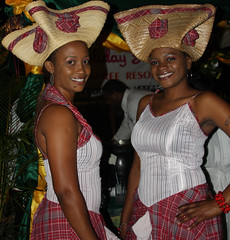
- Dressing -Human present themselves in a decent manner by dressing up. The dressing might be different from one community to another within a country, one country to another or from continent to continent. People from African countries might dress up in traditional or national dresses while the westerners will dress up in suits. However the dress type depends on the occasion as well.
- Food- This is the most fascinating thing. When in travel it one of the things that people complain about is the food they are not used to. But if you are traveling that is what is making it different. You have have cross the cultural food boundary to one that is unfamiliar to you. So food types and the way different foods are made, is the culture of a place. Serving the food is also different, while some culture
sit around the table or even floor and eat from one plate some serve individual plate to each person.Flicker Image by jebrandt99 - Salutations- In the western world, the thumb up is the magic acknowledgment of another person and it means that everything is fine. However, in some regions, you will be lucky if you get it because it means something else. Also the shaking of hand is a big thing in the African countries and in the business would.
- Language-This is where it all starts. Visual cue are exhibited in the look, handmovements, gait, distance from each other, voice intonations and so forth. We all have different
languages as well which adds to it.Flicker Image by squareintheteeth - Conflict-In some culture conflict can be considered a good thing, opportunity for learning and growth and therefore can be tolerated. In other cultures it is the vice vaser and those in conflict have to save face for each other by handling the problem quietly. In these communities collective responsibility is taken for the problem and so the community is involved in solving the problem. This is particularly seen in African cultures while the western culture embrace the individualistic manner of solving problems.
- Business- In the business world it is all the same in terms of meetings, and presentation. Some differences occur in terms of facial contact, handshake and exchanges of pleasantries. In the Chinese business world when given a business
card, you gaze at it for a while and put it on the tables and keep looking at it from time totime to show how responsible you would be taking care of there interests here in theUS. On the other hand, business from the west must just say thank you and put thecard in the pocket.Photo From Flicker - Other cultural aspect of life that have been interesting are way of Religion, different Dances in different regions, the Architectural differences and similarities and the differences in the way they view Art.


Wednesday, April 20, 2011
Sunday, April 3, 2011
The Power of Visual Language Taken a Notch Higher.
This is for sure a world of visuals. Virtually everything that we learn is perceived visually. Have it occurred to you that is the way that babies learn language, not verbally but visually! In the video I have shared with you here, "MIT researcher Deb Roy wanted to understand how his infant son learned language -- so he wired up his house with video cameras to catch every moment (with exceptions) of his son's life, then parsed 90,000 hours of home video to watch "gaaaa" slowly turn into "water." Astonishing, data-rich research with deep implications for how we learn".
Actually a language is highly situational. This means that you cannot easily and successful, for example, learn and master Spanish language while in The US. To do this easily, you need to buy a ticket and travel to Mexico actually stay there for a while to learn Spanish. This is because language is embed in culture and culture can not easily be defined, though it is highly visual. We can see culture around the house, in the way buildings are constructed, people's dress, both visual and verbal languages, what people trade in, how they form relationships, how they marry, in the food they eat and so on. Yet, all these can not be definitively stated in two or three sentences. However, it creates the vital environment filled with visual cues that are essential for the learning of verbal language. This context is very important, the crying of the baby shows that some adult person is going to be in trouble, unless he or she gets things in order.
Simply stated, Deb's research suggests, for example most kitchen vocabulary can be learned by a baby easily when they are in the Kitchen, and so are the bedroom, sittingroom, dinning room, bathroom and so on. This is basically due to how critical visual cue are to the learning process.
Wednesday, March 16, 2011
The Globes at UNI Rod Library Visually Communicate

Is there anyone that still uses globes? I was fascinated by the globes at The Rod Library. I decided that since they attracted my attention so much, I was going to talk about them. Globes are very important in communicating as to how our living earth looks like. Just how we came to our realization that the earth is round, is a mind boggling historical event depicted in these special balls, inspired by the shape of The Living Earth. Special thanks to Gretchen Gould for the unique collection and showing me around.
 The globe also is a very important visual for
teaching. It does not loose value yet as a teaching tool and not even soon. The fact that it is tangible even makes it better. It can be used to illustrate the masses of waters, the mass of land, vegetation, and deserts. At The Rod Library, the globes are are pieces of art radiating the aesthetic value as much as the functional value to direct library users to the maps cabinet on the second floor of the library. The globe on the top right had a spot on it that was worn out due to people touching it, on the spot of the city of Chicago. It downed to me that Chicago is a very popular city here at UNI, by the way the city Chicago on the globe by the main entrance of the library was scratched out. I was expecting Des Moines would be more popular in Iowa, since it is the our capital city.
The Globes communicated loud and clear what kind of information that was in the cabinets they were sitting on. In the cabinets there were even state highway maps and city streets maps.

To signify the importance of the globes there were signs around them, warning against carelessness.
 On the other hand, there were a few shelves of atlases. I believe that the atlases left on the shelves are still very important. However,
 the advent of the internet and especially The Google Maps brought about a huge change.
The interactive maps outperform atlases by far and thus reduce the use of them. In terms of state streets, the GPS has brought about that change were maps are unnecessary. GPS and Goole maps provide real time information of what is on the ground and can, in fact, not only tell you your location but also inform others of your exact location too.
Source: Garmin nuvi 885T GPS Navigation by ComputerTV


Credit to
and


 |
On the other hand, atlases only provide historical information. Globes still serve not only historically valuable information, but also are instrumental for educational purposes of the nature of our home, The Living Earth. They are very rare to see though.

Subscribe to:
Posts (Atom)